

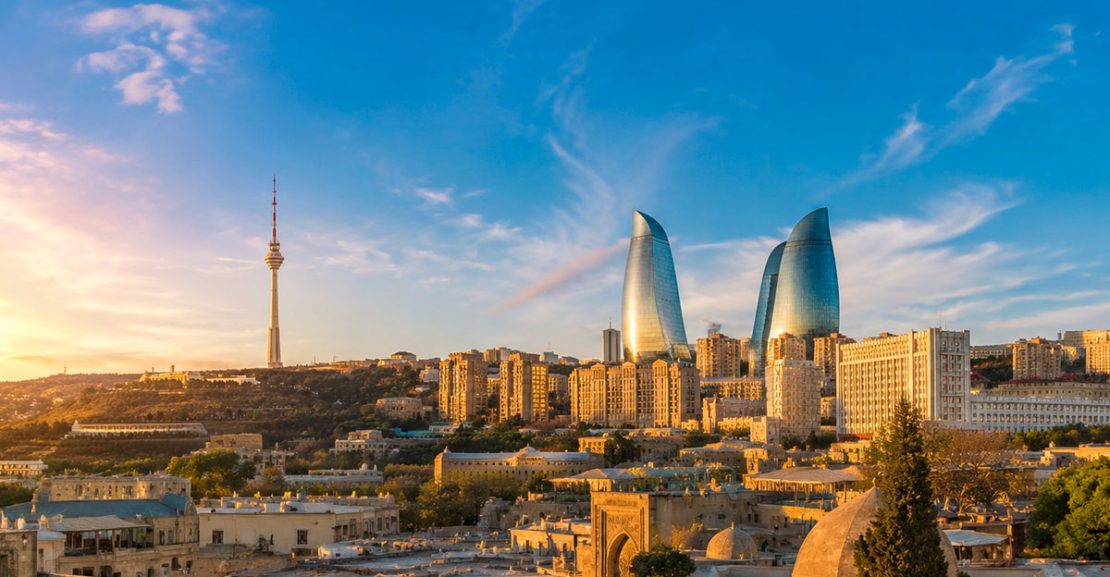
Baku works surprisingly well for a one-day trip. Distances between the main attractions are manageable, the city center is organized in a logical way, and the contrast between centuries-old stone architecture and futuristic landmarks appears almost instantly as you move through different districts. One moment leads into narrow medieval alleys, another opens wide sea-facing promenades lined with modern buildings and illuminated towers.
Starting early makes the route feel relaxed rather than overloaded. Most historical sites inside the Old City become busier closer to midday, especially during warmer months when guided groups arrive in large numbers. Comfortable shoes matter more than complicated planning because much of the itinerary unfolds naturally on foot. Travelers who want more flexibility between locations during the day can also arrange a car rental in Baku through Gurosun and adjust the schedule around their own stops and evening plans.
Morning: The Historic Heart of Icherisheher
The oldest section of Baku preserves the atmosphere that shaped the city long before glass towers appeared along the coastline. Icherisheher, recognized as a UNESCO World Heritage Site, remains surrounded by defensive walls and still functions as a living district rather than an isolated museum complex. Stone passages twist between courtyards, hidden mosques, workshops, and residential buildings where laundry hangs above streets polished smooth by centuries of footsteps.
Morning hours suit this part of the city particularly well. Sunlight falls softly across limestone facades, temperatures remain comfortable for walking, and the quieter streets reveal architectural details often missed later in the day. Small doors, carved balconies, ancient inscriptions, and uneven stairways create the feeling of moving through layers of history instead of visiting a staged tourist attraction.
The Maiden Tower (Qız Qalası)
The Maiden Tower dominates the skyline of the Old City and immediately draws attention because its design differs from surrounding medieval structures. Historians still debate parts of its origin and purpose, which adds another layer of intrigue to the experience. Thick stone walls, narrow internal passages, and low ceilings create a dramatic transition from the bright streets outside.
Climbing upward through the interior exhibition gradually reveals how the structure evolved over different historical periods. Artifacts, maps, and reconstructed displays explain defensive strategies, trade routes, and urban development around the Caspian coast. Reaching the rooftop viewing platform changes the perspective completely. Contemporary Baku suddenly spreads around the ancient tower: curved highways, the bay, Flame Towers, and rows of contemporary buildings rising beyond the old walls.
Morning visibility from the top is usually excellent, especially on clear days when the sea reflects light across the city center. Many travelers spend longer here than expected because every angle offers a different composition of historic and modern Baku together in one frame.
The Palace of the Shirvanshahs
Several minutes away from the Maiden Tower stands the former residence of the Shirvanshah dynasty, one of the most important architectural ensembles in Azerbaijan. The palace complex feels quieter and more contemplative than the surrounding streets. Open courtyards connect royal chambers, mausoleums, prayer halls, and remnants of bathhouses that once served the ruling elite during the fifteenth century.
Attention naturally shifts toward craftsmanship rather than scale. Stone carvings around portals and windows demonstrate remarkable precision, while geometric ornamentation reflects the aesthetic traditions of the medieval Islamic world. Sunlight moving across the pale stone surfaces changes the appearance of the complex throughout the day, making even simple walls appear textured and layered.
Inside several chambers, exhibits explain court life, political history, and ceremonial traditions connected to the Shirvanshahs. Broken fragments of architecture displayed on-site reveal how much detail once decorated the original structures. Walking through the complex creates a deeper understanding of how influential Baku had already become centuries before oil transformed the city into a modern capital.
Traditional Azerbaijani Breakfast
A long walk through Icherisheher quickly builds an appetite, and breakfast in Baku deserves proper attention rather than a rushed coffee stop. Local morning tables usually arrive filled with multiple small dishes placed in the center for sharing. Fresh cheese, honey, butter, olives, herbs, tomatoes, cucumbers, and warm bread often appear together before the main dishes even arrive.
Many visitors try pomidor-yumurta, a comforting tomato-and-egg dish cooked slowly until the flavors become rich and slightly sweet. Others order tendir bread alongside kaymak and homemade jams. Tea carries special importance in Azerbaijani culture and is traditionally served in pear-shaped armudu glasses designed to keep the drink hot longer while remaining comfortable to hold.
Breakfast conversations tend to unfold slowly in Baku. Locals rarely rush through tea, and many cafés inside or near the Old City create an atmosphere where lingering feels natural. Wooden interiors, copper decorations, and the smell of fresh pastries turn a practical meal break into part of the cultural experience itself.
Afternoon: Modern Architecture and Waterfront Walk
Leaving the Old City introduces a completely different side of Baku. Medieval stone corridors give way to broad avenues, polished public spaces, and ambitious contemporary architecture shaped by the city’s rapid transformation during recent decades. Connections between these districts are straightforward, and reaching the modern landmarks usually takes only a short taxi ride or a comfortable walk downhill toward the waterfront.
The transition feels visually dramatic rather than gradual. Futuristic buildings appear beside restored European-style facades, while massive public projects stretch along the Caspian shoreline. Afternoon light works especially well for photography in this part of the city because reflective surfaces, curved structures, and open spaces become brighter and more defined.
Heydar Aliyev Center
Few buildings in the region attract as much attention as the Heydar Aliyev Center. Designed by Zaha Hadid, the structure looks fluid from every angle, almost as if the exterior were shaped by wind rather than engineering calculations. Sharp corners are nearly absent. White surfaces rise and fold into one another in continuous curves that create an entirely different visual rhythm compared to the rigid geometry of most urban architecture.
Walking around the exterior becomes part of the experience because the building constantly changes appearance depending on distance and perspective. Reflections shift across the smooth surfaces while large open plazas surrounding the center allow unobstructed views from multiple directions.
Inside, exhibition halls host rotating displays connected to art, design, culture, and national history. Wide interior spaces continue the flowing architectural language established outside, creating a sense of continuity throughout the building. Even visitors without a strong interest in architecture usually spend considerable time here simply observing how naturally the massive structure integrates movement, light, and space.
Seaside Boulevard & Little Venice
Baku Boulevard stretches for kilometers along the Caspian waterfront and serves as one of the city’s main social spaces. Families walk here in the evenings, cyclists move along designated lanes, street musicians perform near cafés, and the sea breeze softens the heat during warmer months. The atmosphere changes continuously depending on the section of the promenade.
Little Venice introduces a playful contrast within the larger waterfront area. Small canals weave between miniature bridges and colorful boats carrying visitors through calm artificial waterways surrounded by landscaped gardens. Reflections from nearby buildings shimmer across the water during the late afternoon, creating one of the more photogenic corners of central Baku.
Nearby landmarks continue the modern visual theme. The curved form of the Azerbaijan Carpet Museum immediately stands out because the entire structure resembles a rolled carpet. Public art installations, contemporary hotels, and open plazas nearby reinforce how heavily Baku places enormous attention on the appearance and atmosphere of its waterfront districts.
Evening: Panoramic Views and City Illuminations
Sunset changes the personality of Baku dramatically. Daylight softens, reflections spread across the bay, and illuminated architecture begins dominating the skyline. Streets that appeared elegant during the afternoon suddenly feel cinematic after dark as lighting emphasizes the city’s layered architecture and elevated terrain.
Evening hours also bring cooler temperatures that make walking far more comfortable, especially during summer. Cafés fill with locals, waterfront areas become livelier, and observation points overlooking the bay attract photographers waiting for the city lights to fully emerge.
Highland Park and Flame Towers
Highland Park provides the most impressive panoramic viewpoint in Baku. Reaching the upper terrace by funicular creates a gradual reveal of the skyline, though many visitors choose the staircase route for additional city views during the climb. Once at the top, the entire bay opens below in a sweeping arc framed by illuminated streets and modern towers.
The Flame Towers dominate the scene after sunset. Their LED displays transform continuously throughout the evening, projecting moving fire patterns, national colors, and animated graphics visible across large sections of the city. Reflections from the towers spread across nearby glass buildings and shimmer over the Caspian coastline.
Standing near the viewing platform gives a clear sense of Baku’s geographic layout. The Old City walls, waterfront boulevard, modern business districts, and residential neighborhoods all become visible simultaneously. Night photography enthusiasts often remain here long after dark because the lighting conditions evolve throughout the evening.
Nizami Street and Fountain Square
The final stage of the itinerary shifts back to street-level energy. Nizami Street remains one of Baku’s busiest pedestrian areas, lined with elegant late nineteenth- and early twentieth-century facades influenced by European architectural styles. Decorative balconies, ornate windows, and illuminated storefronts create a lively urban atmosphere that feels completely different from the quiet stone passages of Icherisheher earlier in the day.
Fountain Square nearby acts as a gathering point where restaurants, cafés, and open-air terraces stay active deep into the evening. Music drifts through the streets while visitors move between dessert shops, tea houses, and traditional restaurants serving Azerbaijani cuisine.
Dinner becomes the perfect closing experience for a one-day route through Baku. Fragrant plov prepared with saffron rice often arrives in generous portions alongside grilled kebabs, fresh herbs, pickled vegetables, and crispy qutab filled with meat, greens, or cheese. Tables usually fill quickly during evening hours, particularly around the most popular pedestrian streets where locals and travelers mix naturally.
Why Baku Works Perfectly for a Short City Escape
Baku manages to compress remarkably different experiences into a compact and accessible urban layout. Ancient fortifications, futuristic architecture, waterfront promenades, panoramic viewpoints, and traditional food culture all fit comfortably into a single well-planned day without creating an exhausting schedule.
Many capital cities require several days before visitors understand their rhythm. Baku reveals its identity much faster. Historical depth appears immediately inside the Old City, while modern development becomes visible only minutes later along the boulevard and skyline. That contrast gives even a short visit a strong sense of variety and movement.
Twenty-four hours here rarely feels rushed when the route is organized intelligently. Comfortable walking distances, affordable transportation, and concentrated landmarks allow travelers to experience a substantial part of the city within one day while still leaving enough time to sit down for tea, admire the evening lights, and absorb the atmosphere beyond the main attractions.