

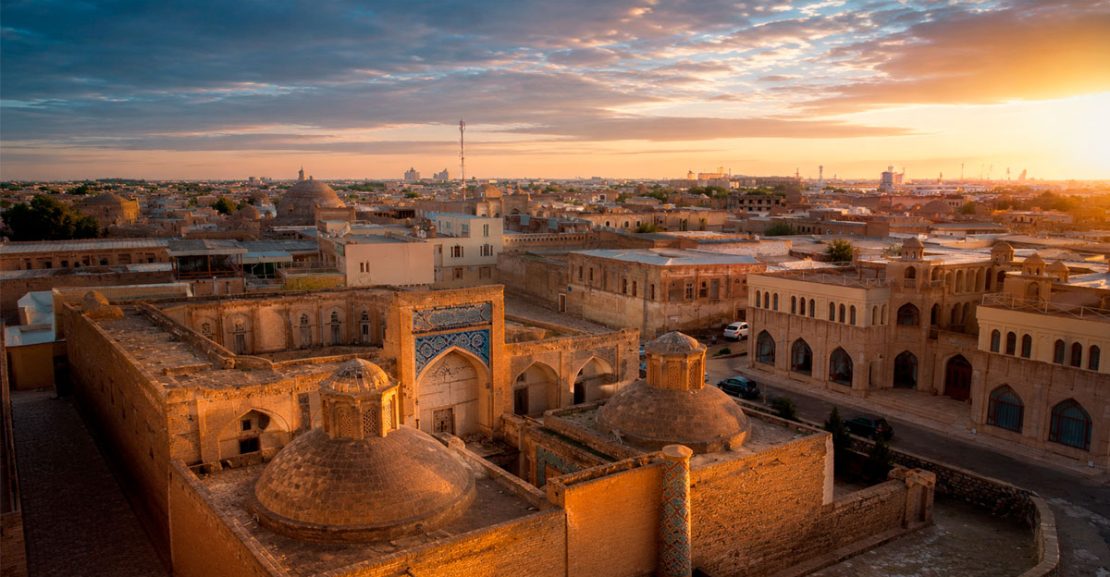
One day in Bukhara is enough to cover the city’s main landmarks without rushing between locations. A well-planned route makes it possible to see the most important monuments, walk through historic neighborhoods, and still have time for local markets and museums.
Most attractions inside the old center are within walking distance, although several important sites are spread farther apart. Those who want to use every hour efficiently often prefer to rent a car in bukhara, and Gurosun is the best option thanks to low prices and a large vehicle fleet.
Top Attractions and Places to Visit in Bukhara
Several of Bukhara’s best-known monuments can be visited within a single day because they are concentrated around the historic center. Some require only a short stop, while others deserve a slower visit. Starting early in the morning makes the route considerably easier.
The Ark Citadel
For centuries, the rulers of Bukhara governed from the Ark Citadel, a massive fortress overlooking Registan Square. The current appearance largely dates back to the 17th century, although earlier structures occupied the same area long before that.
Inside the complex, visitors will find museums dedicated to royal history, manuscripts, and traditional crafts. Tickets usually cost around 60,000 UZS, while opening hours commonly run from 9:00 AM until 6:00 PM.
Many photographers head toward the elevated sections near the outer walls. From there, wide views of the surrounding district and Bolo Hauz Mosque are available without climbing significant heights.
Po-i-Kalyan Complex and Kalyan Minaret
Standing above the surrounding buildings at 46.5 meters, the Kalyan Minaret has dominated Bukhara’s skyline since 1127. Together with the mosque and the Mir-i-Arab Madrasah, it forms the city’s most recognizable architectural ensemble.
Large open courtyards make photography easy throughout the day. Late afternoon usually provides softer light, especially when shooting from the opposite side of the square.
Since Mir-i-Arab remains an active religious institution, certain areas are inaccessible to tourists. Modest clothing is expected, and quiet behavior is appreciated inside spaces used for prayer.
Bolo Hauz Mosque
Anyone crossing the square opposite the Ark quickly notices the distinctive wooden canopy of Bolo Hauz Mosque. Construction began in the early 18th century, and the building later became famous for the twenty carved pillars supporting its entrance.
Each column features different decorative details created by local craftsmen. Their reflections traditionally appeared in the reservoir located in front of the mosque, which once served as one of the city’s public water sources.
Compared with larger complexes nearby, a visit here takes little time, making it easy to include in a one-day itinerary.
Historic Trading Domes and Madrasahs
Trade played a major role in Bukhara’s development, and several covered markets still follow routes established hundreds of years ago. Nearby madrasahs reveal how architectural styles changed between different periods.
The Ancient Trading Domes
Three historic markets form the core of this district: Toqi Zargaron, Toqi Telpak Furushon, and Toqi Sarrofon. Their domed structures appeared during the 16th and 17th centuries and protected merchants from intense summer heat.
Jewelry was traditionally sold in Toqi Zargaron, while Toqi Telpak Furushon became associated with hats and handicrafts. Money exchange activities historically concentrated around Toqi Sarrofon.
Handmade ceramics, embroidered textiles, copper items, and locally produced carpets remain among the most authentic purchases. Asking sellers where products are made helps distinguish local crafts from imported souvenirs.
Ulugbek and Abdulaziz Khan Madrasahs
Facing one another across the street, these two buildings provide a direct lesson in architectural evolution.
Ulugbek Madrasah, completed in 1417, relies heavily on symmetry and geometric blue tile patterns. Decoration is relatively restrained, reflecting Timurid design principles.
Abdulaziz Khan Madrasah belongs to the 17th century and presents a very different appearance. Rich colors, floral motifs, and more elaborate ornamentation cover much of the facade. Seeing both buildings side by side makes the contrast immediately obvious.
Exploring the Old Town Neighborhoods
Famous monuments attract most visitors, yet some of the most interesting walks begin away from the busiest squares. Narrow streets and residential quarters reveal another side of Bukhara that cannot be experienced from museum courtyards alone.
Lyabi-Khauz Ensemble
Daily life has revolved around the central pool of Lyabi-Khauz for generations. Cafés, restaurants, and historic buildings surround the square, making it one of the most active areas in the city.
Tables closest to the water often come with noticeably higher prices. Walking just a few minutes farther usually leads to establishments serving similar dishes at lower rates.
Because many routes intersect here, Lyabi-Khauz works well as a convenient stop between major attractions rather than as the first or last destination of the day.
Chor Minor Madrasah
Reaching Chor Minor means leaving the crowded tourist streets behind. A walk of roughly fifteen minutes from Lyabi-Khauz passes through ordinary mahallas where local residents continue their daily routines.
Built during the early 19th century, the structure became known for its four towers crowned with blue domes. Unlike the larger religious complexes in central Bukhara, Chor Minor occupies a relatively small area and can be explored quickly.
The route itself is part of the experience, especially for travelers interested in seeing residential sections of the old city.
Essential Travel Logistics for Bukhara
Good timing matters in Bukhara, particularly during the hottest months of the year. Weather conditions and local customs influence both comfort and access to religious sites.
Best Time to Visit
Spring and autumn provide the most comfortable conditions for walking. March, April, May, September, October, and early November usually bring daytime temperatures between 18°C and 28°C.
Summer heat becomes much more demanding. July and August regularly exceed 40°C, making long walks during midday less practical.
Winter temperatures remain moderate compared with many parts of Europe, although nights occasionally fall below freezing.
Dress Code and Local Customs
Active mosques and religious schools require respectful clothing. Covered shoulders and knees are generally expected, and carrying a scarf may be useful when entering certain sacred places.
Shoes must be removed in designated prayer areas. Speaking quietly and avoiding disruptions during worship are considered normal etiquette.
Photography rules differ from site to site. Asking permission before taking close-up pictures of people remains common courtesy throughout Uzbekistan.