

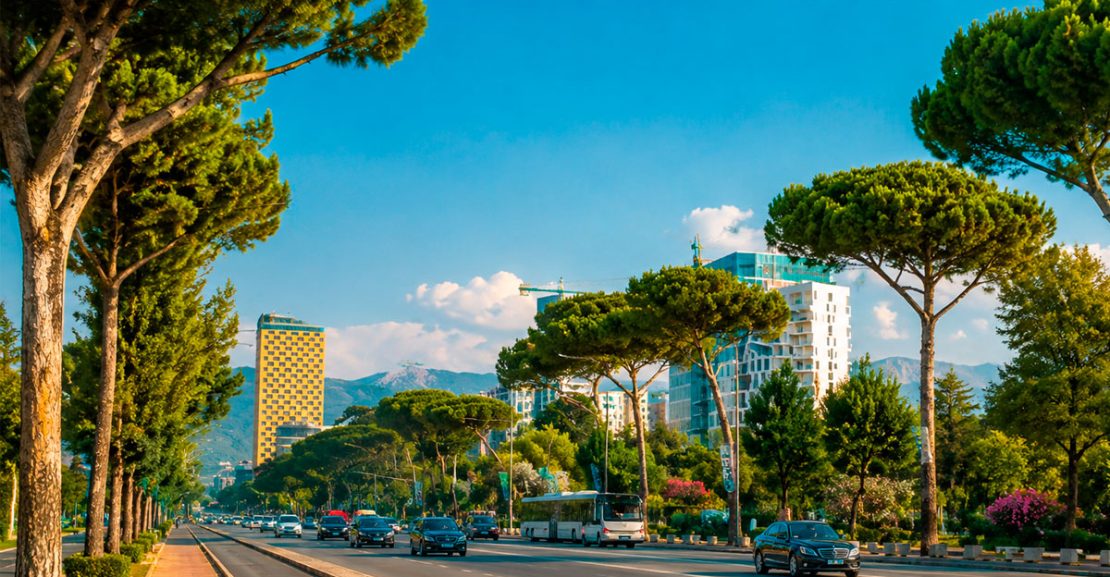
Few places in Southeast Europe teach road awareness as quickly as a day behind the wheel in Tirana. Traffic rarely stands completely still, yet it rarely flows exactly as road markings suggest either. Cars move with intent, people react quickly, and most situations resolve through anticipation rather than strict sequencing. Inside the central districts, speeds remain relatively moderate, which is one reason serious incidents in dense urban traffic are less common than many first-time visitors expect.
The first adjustment usually comes from changing expectations, not driving style. Indicators may appear late, lane discipline can loosen near intersections, and short horn signals often work as communication rather than frustration. Drivers who stay observant and avoid treating every merge as a confrontation generally settle into the rhythm faster.
Parking has a bigger effect on the overall experience than traffic itself. Knowing where paid zones start, how enforcement works, and when underground garages save time can remove most of the friction from driving around Tirana.
Understanding the Local Driving Culture
Driving culture in Tirana rewards awareness and quick reading of situations more than strict prediction. Local drivers tend to make decisions confidently and expect surrounding traffic to react accordingly.
That does not mean rules disappear. Road signs, markings, and priorities still matter. The difference is that traffic often operates with an additional layer of informal understanding built through movement and timing.
Drivers who leave space and keep momentum usually move more comfortably than those trying to defend every meter of road.
Roundabouts and Right of Way in Tirana
Roundabouts are one of the places where local habits become most visible.
Officially, vehicles already inside the roundabout have priority. Real traffic conditions can look different. Drivers entering sometimes commit early and expect others to adjust. Waiting for a completely empty opening may leave you sitting longer than necessary.
Useful habits:
- Slow before entering even if traffic appears light.
- Watch vehicle movement instead of trusting indicators alone.
- Signal clearly when exiting.
- Avoid changing lanes inside smaller roundabouts.
- Keep decisions smooth rather than sudden.
A measured and confident entry usually works better than repeated hesitation.
Pedestrians and Unexpected Maneuvers
Urban driving requires attention beyond cars.
Pedestrians occasionally cross outside designated areas, especially near commercial streets and neighborhood shortcuts. Public transport vehicles may stop abruptly to pick up passengers. Delivery vans often occupy space that technically remains part of an active lane.
Pay extra attention:
- Near schools and local markets.
- Around bus stops.
- Along narrow streets with parked vehicles.
- Before entering intersections with multiple turning directions.
Mirror checks become more useful than speed in many situations.
Navigating Traffic and Rush Hours
Travel time in Tirana depends more on timing than distance.
Routes that feel quick during late morning may become heavily delayed later in the day. Local traffic patterns repeat fairly consistently during weekdays, which makes planning easier once peak periods become familiar.
Navigation tools help, but watching the actual flow around you remains valuable.
Peak Times to Avoid
The busiest periods are usually:
07:30–09:30 — traffic moving toward offices, schools, and central business areas.
16:30–19:30 — broader evening congestion across major corridors.
Areas that frequently slow down:
- Durrës Street corridor.
- Zogu I Boulevard.
- Roads surrounding Skanderbeg Square.
- Sections leading toward the Artificial Lake area.
Short trips inside the center can take noticeably longer during evening hours than drivers initially estimate.
Moving departure time by even twenty minutes sometimes changes the experience completely.
Best Navigation Apps for the City
No single app performs best in every situation.
Google Maps
- Strong destination search.
- Reliable traffic overview.
- Good for standard city navigation.
Waze
- Reacts faster to local slowdowns.
- Useful when route conditions change suddenly.
- Popular among drivers monitoring congestion.
Magic Earth
- Practical for offline use.
- Lower mobile data dependence.
- Helpful if coverage becomes inconsistent.
Offline maps remain useful when entering underground parking or moving through dense central streets.
The Ultimate Tirana Parking Guide
Parking strategy influences the day more than route choice.
Street parking exists across central areas, but understanding payment systems and realistic expectations prevents unnecessary delays.
Public Street Parking (Zones and Rates)
Blue Zone parking covers many central streets and operates through paid access.
Recommended process:
- Park only inside marked spaces.
- Check signs for the correct zone.
- Select payment method.
- Confirm activation before leaving.
Payment methods commonly include:
- SMS using an Albanian mobile operator.
- Parking applications where available.
- Scratch cards purchased at participating kiosks.
Drivers using international numbers should confirm compatibility before relying on SMS payment.
Typical pricing often ranges around:
100–200 ALL per hour
Do not assume payment was successful until confirmation appears.
Underground and Secured Garages
Underground garages reduce uncertainty and often save time.
Common choices include garages:
- Under Skanderbeg Square.
- Near Toptani Shopping Center.
- Around larger mixed-use developments in central Tirana.
Advantages:
- Better availability during busy periods.
- Reduced risk of blocked exits.
- Faster departure during evening traffic.
Typical pricing:
200–300 ALL per hour
Daily options available at some facilities.
Long stays often make garages more practical than repeated searching.
Free Parking Realities
Free parking can still be found, but location and timing matter.
Outer neighborhoods offer more opportunities than the center. Residential streets sometimes have available spaces outside working hours.
Check carefully for:
- Restricted residential access.
- Driveway entrances.
- Temporary local controls.
- Areas without clear markings.
An empty space in a crowded area deserves a second look before parking.
Fines, Towing, and Enforcement
Traffic enforcement has become more visible in recent years, especially around parking and stopping restrictions.
Understanding the process removes uncertainty if something goes wrong.
Common Violations and Police Interactions
Frequent reasons for penalties:
- Parking outside designated areas.
- Blocking pedestrian access.
- Stopping too close to intersections.
- Ignoring lane restrictions.
During interactions:
- Keep documents accessible.
- Answer directly.
- Ask questions if instructions are unclear.
- Stay calm and practical.
Most situations are resolved quickly when communication stays straightforward.
How Towing Works and How to Pay Fines
If the vehicle disappears from where it was parked:
- Confirm whether towing occurred.
- Contact traffic authorities.
- Request impound information.
- Bring vehicle documents.
- Complete payment procedures.
Costs may include:
Administrative fine.
Towing charge.
Storage fee.
Handling the process early usually keeps expenses lower.
Essential Tips for a Stress-Free Drive
Good driving days in Tirana usually come from expectations, not luck.
The city rewards calm reactions more than aggressive positioning.
Defensive Driving Tactics
Practical habits:
- Keep more following distance than traffic seems to invite.
- Scan mirrors frequently.
- Expect lane changes around slower vehicles.
- Ignore pressure from unnecessary horn use.
- Focus on predictable movement.
Someone moving into your lane is often expecting cooperation rather than conflict.
Small delays rarely change the outcome of the trip.
Night Driving and Road Conditions
Night driving changes the environment noticeably.
Central areas remain easier to read, while outer districts may have weaker lighting and less visible markings.
Pay extra attention around:
- Construction sections.
- Residential streets.
- Intersections after rain.
- Uneven road surfaces.
Reducing speed slightly often improves reaction time more than stronger headlights.
Drivers who stay patient after dark usually find evening traffic easier than expected.