

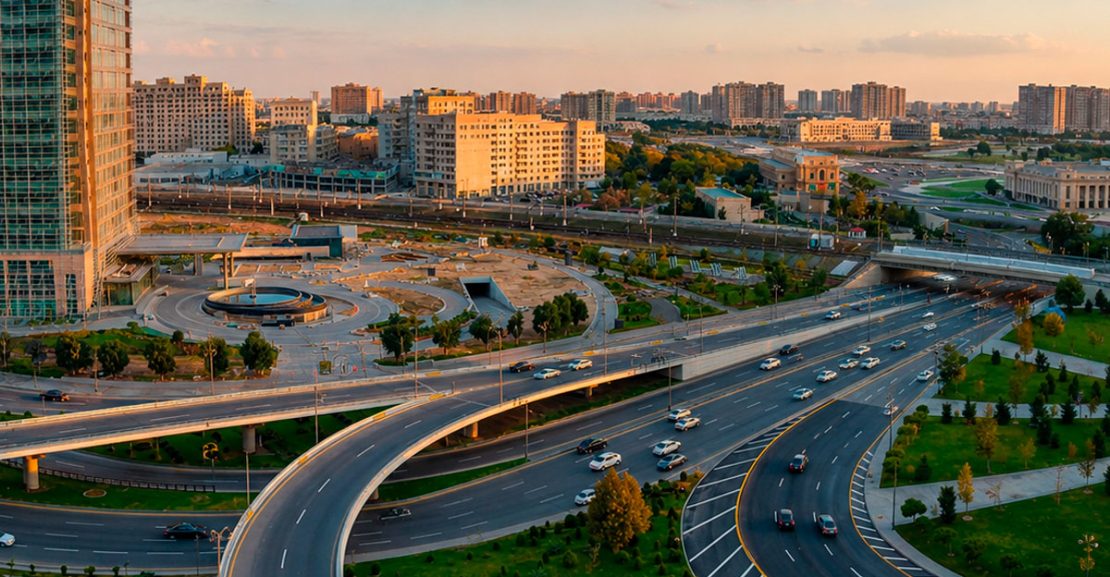
Getting familiar with the roads of a new city is often much easier when the infrastructure is designed with drivers in mind. Baku has undergone significant development over the past two decades, and that progress is clearly visible in its road network. Wide avenues, modern interchanges, clear signage, and direct connections between key districts help create a comfortable driving environment for both residents and visitors.
Those planning to drive during their stay will find that moving around the city is generally straightforward. Understanding local traffic rules, parking options, and a few practical details beforehand can help avoid confusion and make every journey more enjoyable, whether the destination is a historic landmark, a seaside promenade, or a place far beyond the city limits.
Road Infrastructure and Traffic Flow in Baku
Road quality is one of the strongest aspects of driving in Baku. Main arteries are typically well maintained, lane markings are clearly visible, and many major intersections have been redesigned to improve traffic movement. Drivers arriving from other large cities often adapt quickly because the overall layout follows a logical structure.
Several districts are connected by broad multi-lane roads that allow vehicles to move efficiently across the city. Modern tunnels and overpasses help reduce delays at some of the busiest junctions, while direct routes make it easier to travel between central areas and outer neighborhoods.
Traffic conditions depend heavily on the time of day. Early mornings and late afternoons usually bring increased activity around business centers, government offices, and commercial districts. Outside these periods, many routes feel noticeably less crowded. Drivers who are unfamiliar with the city often find that navigation becomes much easier after only a few trips.
Key Traffic Regulations for International Drivers
Local traffic regulations are relatively easy to understand for anyone who has previously driven in Europe, North America, or other countries with established road systems. Traffic signs are recognizable, road markings are clear, and basic driving principles follow international standards.
Seat belts must be worn by vehicle occupants where required by law. Traffic lights, lane markings, and regulatory signs should always be observed carefully. Using a mobile phone while driving is restricted unless an approved hands-free system is being used.
Police patrols and automated monitoring systems are present throughout the city and on major highways. Compliance with local regulations is generally straightforward, especially when drivers pay attention to posted signs and road markings rather than relying entirely on navigation applications.
Standard Speed Limits and Controls
Speed limits vary depending on the road category. In most urban areas, the standard limit is 60 km/h. Higher limits may apply on selected roads where additional signage indicates different restrictions. On many major highways outside the city, speeds of up to 110 km/h are permitted.
Speed cameras are widely used on both urban roads and intercity routes. Their locations are often indicated by road signs, although drivers should remain attentive regardless of whether a warning sign is present.
When leaving the city, it is important to watch for changes in speed regulations, particularly when moving between urban zones, suburban areas, and highway sections. Posted signs always take precedence and should be followed carefully.
Understanding Right-of-Way at Roundabouts
Roundabouts play an important role in managing traffic throughout Baku. Visitors who are unfamiliar with them should not be concerned, as the basic principle is easy to follow.
Vehicles already circulating within the roundabout have priority. Drivers approaching an entry point should wait for a suitable gap before joining the flow of traffic. Once inside, maintaining a consistent speed helps improve traffic movement and makes intentions easier for others to anticipate.
Lane markings deserve particular attention on larger roundabouts. Some lanes are designated for specific exits, and checking the road markings in advance can prevent unnecessary last-minute maneuvers.
Smart Parking in Baku: Quick and Easy Methods
Parking has become considerably more convenient thanks to the growing use of digital systems across the city. Many central districts operate organized paid parking zones that are clearly marked and easy to identify.
Areas near shopping streets, office buildings, public institutions, and popular attractions often provide designated parking spaces managed through electronic payment systems. As a result, drivers rarely need to spend time searching for attendants or handling cash transactions.
Before leaving a vehicle, it is always worth checking nearby signs for information regarding payment requirements and parking conditions.
How to Use the Official AzParking App
The AzParking application provides one of the simplest ways to pay for parking in designated zones.
After downloading the application, users create an account and enter their vehicle details. Once parked, the correct parking zone can be selected within the app, followed by payment for the desired period.
The system records the active parking session electronically, removing the need for paper tickets. Drivers can also extend their parking time remotely if plans change during the day.
Keeping sufficient account balance and verifying the selected parking zone before confirming payment can help avoid unnecessary issues.
Alternative Ways to Pay for Parking Slots
Not everyone prefers mobile applications, particularly when visiting a country for a short period. Fortunately, additional payment methods are available in various parking zones.
Depending on the location, drivers may find payment terminals or other officially supported electronic solutions. Some systems allow payments linked to local mobile services, while others support card transactions through designated machines.
Availability may differ from one district to another, making it worthwhile to review the instructions displayed within the parking area.
Helpful Navigation Tips for Getting Around the City
Modern navigation applications work well throughout Baku and are commonly used by local drivers. Real-time traffic updates can be especially useful during periods of heavier congestion, helping identify alternative routes before delays become significant.
Scheduling longer journeys outside peak traffic periods can make a noticeable difference. Mid-morning and early afternoon hours are often more comfortable for crossing the city than the busiest commuting periods.
Drivers interested in sightseeing may wish to include routes along the Caspian coastline. Several roads provide excellent views of the waterfront, contemporary architecture, and some of the city’s most recognizable landmarks. Combining transportation with sightseeing is an easy way to see more of the capital without making major changes to a travel schedule.
Downloading offline maps before departure can also be helpful, particularly for longer trips beyond urban areas.
Essential Driver Checklist Before Heading Out
A quick review before starting the engine can prevent unnecessary interruptions later in the day.
Drivers should carry a valid driver’s license, passport or identification document, vehicle registration papers, and any rental or authorization documents associated with the vehicle. Checking fuel levels before leaving the city is also a sensible habit, especially when planning a longer route.
Navigation should be configured before departure rather than while driving. Confirming the destination, reviewing the planned route, and checking current traffic conditions usually takes only a few minutes but can save considerably more time on the road.
Courtesy remains important regardless of location. Clear signaling, reasonable lane discipline, and patience in busy traffic contribute to a more predictable driving environment for everyone.
Enjoying Your Journey on Baku Roads
Exploring Baku by car allows visitors to see far more than the areas surrounding major tourist attractions. The city combines modern infrastructure, efficient road connections, and increasingly convenient digital services, creating conditions that are well suited to independent travel.
A basic understanding of local regulations and parking systems is often all that is needed to feel comfortable behind the wheel. With those essentials covered, attention can shift to the experience itself — discovering different neighborhoods, enjoying views of the Caspian Sea, and exploring destinations beyond the capital.
Once you’re familiar with the basics, getting around the city becomes surprisingly straightforward, leaving more time to focus on the places you came to see.